
August 4, 2026
Tankless vs. Traditional Water Heater: Which Saves More in Southern MD?
Running out of hot water mid-shower has a way of making you rethink your entire water heater setup. If you're replacing an aging unit or planning for a new build in Calvert, Charles, St. Mary's, or Prince George's County, one of the first decisions you'll face is tankless versus traditional. Both do the same basic job — they just go about it very differently, and that difference shows up on your energy bill.
How Each System Works
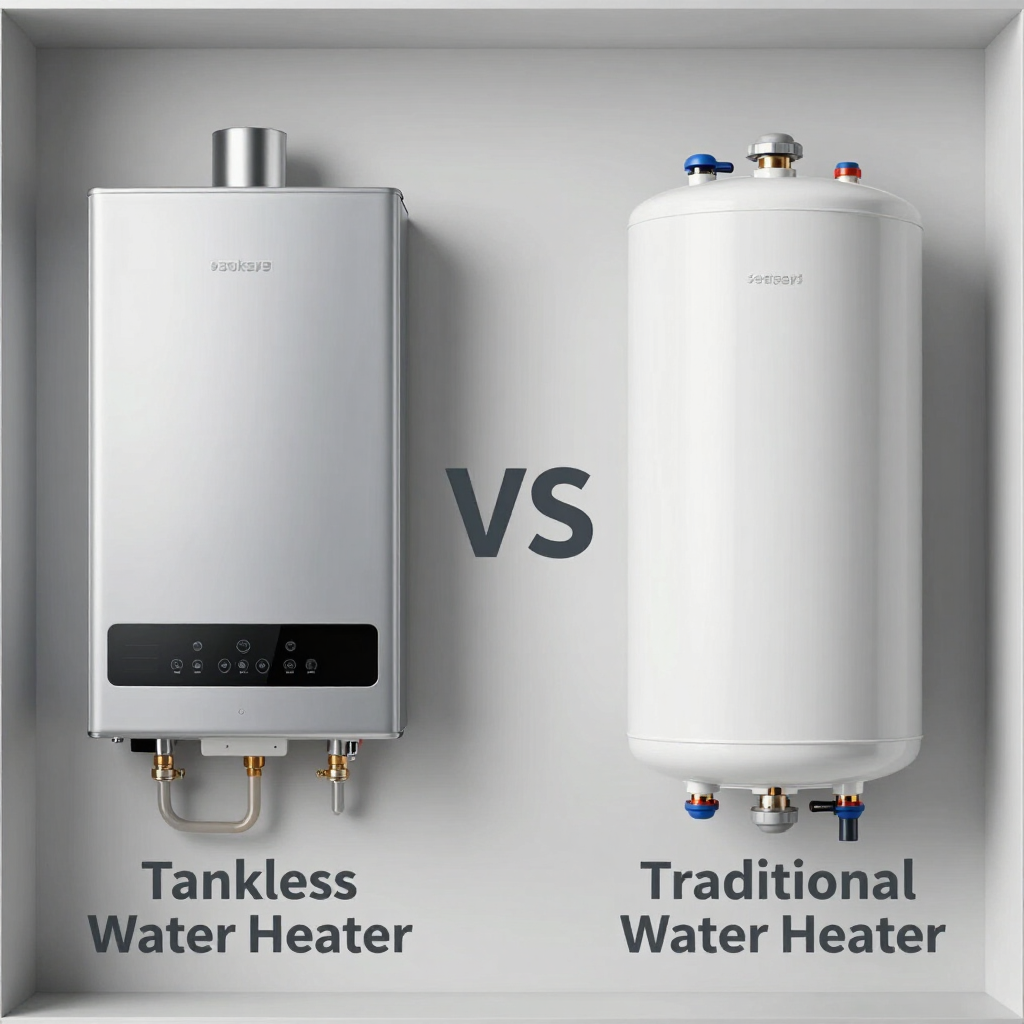
Traditional water heaters store 40-80 gallons of hot water in a tank, keeping it heated and ready around the clock. When you turn on the tap, hot water is already there waiting.
Tankless water heaters heat water on demand as it flows through the unit, with no storage tank at all. Water is heated only when you need it, whether that's for a five-minute shower or running the dishwasher.
Energy Efficiency and Cost Savings
This is where tankless tends to have the edge. Because traditional tanks keep water hot all day, they lose energy through standby heat loss — even when no one's using hot water. Tankless units skip that entirely, only firing up when there's demand.
- Tankless systems can be noticeably more energy efficient for average-use households, which adds up over a year of bills.
- Traditional tanks cost less upfront to purchase and install, which matters if you're working with a tighter budget.
- Tankless units typically last longer than tank models, which can offset the higher initial cost over time.
- Larger households with heavy simultaneous hot water use may need a higher-capacity tankless unit, or more than one, to avoid a drop in performance.
Installation Considerations
Traditional water heaters are usually a straightforward swap, especially if you're replacing a like-for-like unit. Tankless systems often require some adjustments to your home's gas line or electrical setup to handle the higher demand, which can mean a larger upfront installation cost. It's worth having a technician evaluate your home's specific setup before deciding, since the right system depends on more than just the unit itself.
Space and Lifespan
Tankless units are compact and mount on a wall, freeing up floor space compared to a bulky tank. They also tend to last longer, often outlasting a traditional tank by several years with proper maintenance. Traditional tanks are simpler in design and easier for many technicians to service quickly, which can mean less downtime if something needs a repair.
Which One Actually Saves You More?
For most Southern Maryland households with moderate hot water use, tankless systems tend to save more over the life of the unit thanks to lower operating costs and a longer lifespan. But the higher upfront investment means the payback period matters — if you're planning to move in a few years, a traditional tank may make more financial sense right now. The best answer depends on your household size, hot water habits, and how long you plan to stay in your home.
Learn more about tankless water heater installation or explore our traditional water heater options to see which fits your home.
Contact S.J. Johnson Company today for a free consultation, and we'll help you find the right water heater for your home and budget.